


06.05.2026
Collaboration led by Göttingen University awarded HFSP funding to study biophysical properties
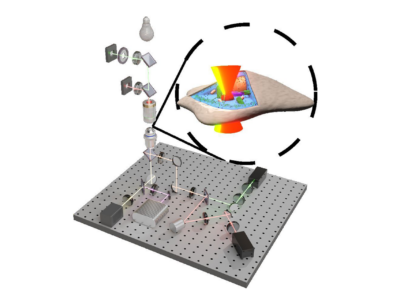
An international, interdisciplinary team of researchers led by Göttingen University has been awarded a Human Frontiers Science Program (HFSP) research grant for the project “Noise or signal? Information fidelity at the edge of jamming”. The award is worth 1.2 million dollars for 3 years. Together with academics from New York
30.04.2026
New insights into Noonan syndrome
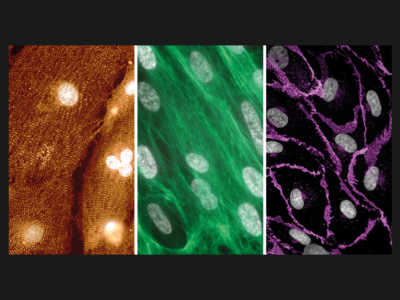
A research team in Göttingen led by MBExC member Dr. Lukas Cyganek, Head of the Stem Cell Unit at the Department of Cardiology and Pneumology at the Göttingen University Medical Center (UMG), has demonstrated that connective tissue cells in the heart – known as cardiac fibroblasts – play a key

31.03.2026
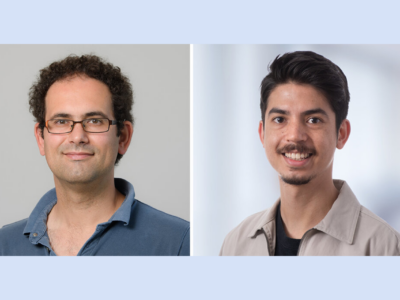
Timo Betz awarded Volkswagen Foundation Momentum funding
MBExC member Professor Timo Betz at Göttingen University’s Faculty of Physics has been awarded Momentum funding by the Volkswagen Foundation for his project “From Cells to Smart Gels: Momentum in Motion”. The award is worth just under 950,000 Euros over 4 years with a possible extension of 2 years. It

18.03.2026
Leopoldina awards biochemist Melina Schuh the Carus Medal
In order to support couples struggling with infertility, the formation of human germ cells must be precisely understood. Biochemist and MBExC member Melina Schuh studies the development of mammalian egg cells and has discovered why errors can occur during egg cell formation. In recognition of this work, the German National
16.03.2026
High-resolution electron microscopy sheds light into the cellular responses to stress
An international team led by researchers from the University Medical Center Göttingen (UMG) has used advanced electron microscopy technologies to capture key cellular mechanisms of stress resistance with near-atomic precision. They were able to show that the protein mHsp60, which helps other proteins to adopt their functional form, remodels its
16.03.2026
Clock generator for the heart
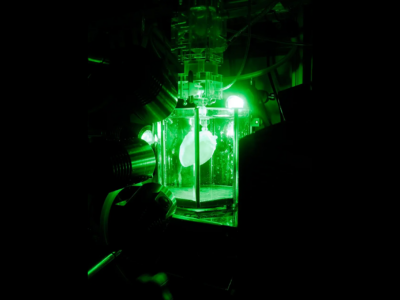
Cardiac arrhythmias are one of the main causes of death in industrialised countries. These are often treated with defibrillators, which deliver painful electric shocks. However, physicist and MBExC member Stefan Luther has found a gentler way to stop these arrhythmias. He is now working with industry partners to bring the

03.03.2026
Precision medicine for rare heart diseases
Göttingen research receives millions in funding The University Medical Center Göttingen (UMG) is receiving over one million euros from the zukunft.niedersachsen funding programme for a gene therapy project to treat Noonan syndrome. The focus is on developing individually tailored therapies for children with heart disease. Rare diseases often

03.03.2026
Tiny flows, big insights: microfluidics system boosts super-resolution microscopy
International research team led by Göttingen University design versatile imaging system Understanding how cells are organized and how their molecular components interact in a coordinated and cooperative manner is a central goal of modern life sciences. To answer these questions, researchers need to observe many structures inside the same
23.02.2026
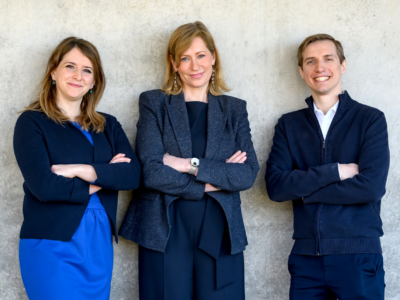
Ovo Labs receives Max Planck Startup Award of the Stifterverband 2026
This year’s Max Planck Start-up Award of the Stifterverband honours the work of Ovo Labs. Founded in 2025 as a spin-off from the Max Planck Institute for Multidisciplinary Sciences in Göttingen, the young biotech company develops novel therapeutics designed to improve the quality of human oocytes (egg cells). The prize,
20.01.2026
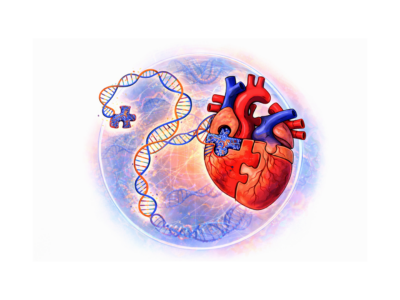
Spatial organisation of genetic material influences heart disease
In a joint study conducted by the DZHK sites in Heidelberg, Munich and Göttingen, researchers are deciphering how the spatial organisation of the genome in the heart determines genetic disease risks. Most of the genetic risk variants for heart disease are outside of genes and don’t work the same
