


Göttingen research receives millions in funding
The University Medical Center Göttingen (UMG) is receiving over one million euros from the zukunft.niedersachsen funding programme for a gene therapy project to treat Noonan syndrome. The focus is on developing individually tailored therapies for children with heart disease.
Rare diseases often present significant medical challenges for patients and their families. Diagnosis can be difficult, and treatment options may be limited or unavailable. However, modern precision medicine techniques now enable us to understand diseases at the genetic level and treat them in a targeted manner. As part of the zukunft.niedersachsen joint funding programme run by the Ministry for Science and Culture of Lower Saxony and the Volkswagen Foundation, nine particularly innovative research projects have been selected. A total of around 13.5 million euros is available for this purpose.
One of these projects is based in the Department of Cardiology and Pneumology at the University Medical Center Göttingen. The project, ‘CRISP-RAS: Testing of CRISPR-based gene therapies for RASopathies’, is led by MBExC member Dr. Lukas Cyganek, Head of the Stem Cell Unit, and Dr. George Kensah. It is funded to the tune of 1.050.230 Euro and aims to help children with a rare genetic heart muscle disease.
You can find the press release (in German) here.
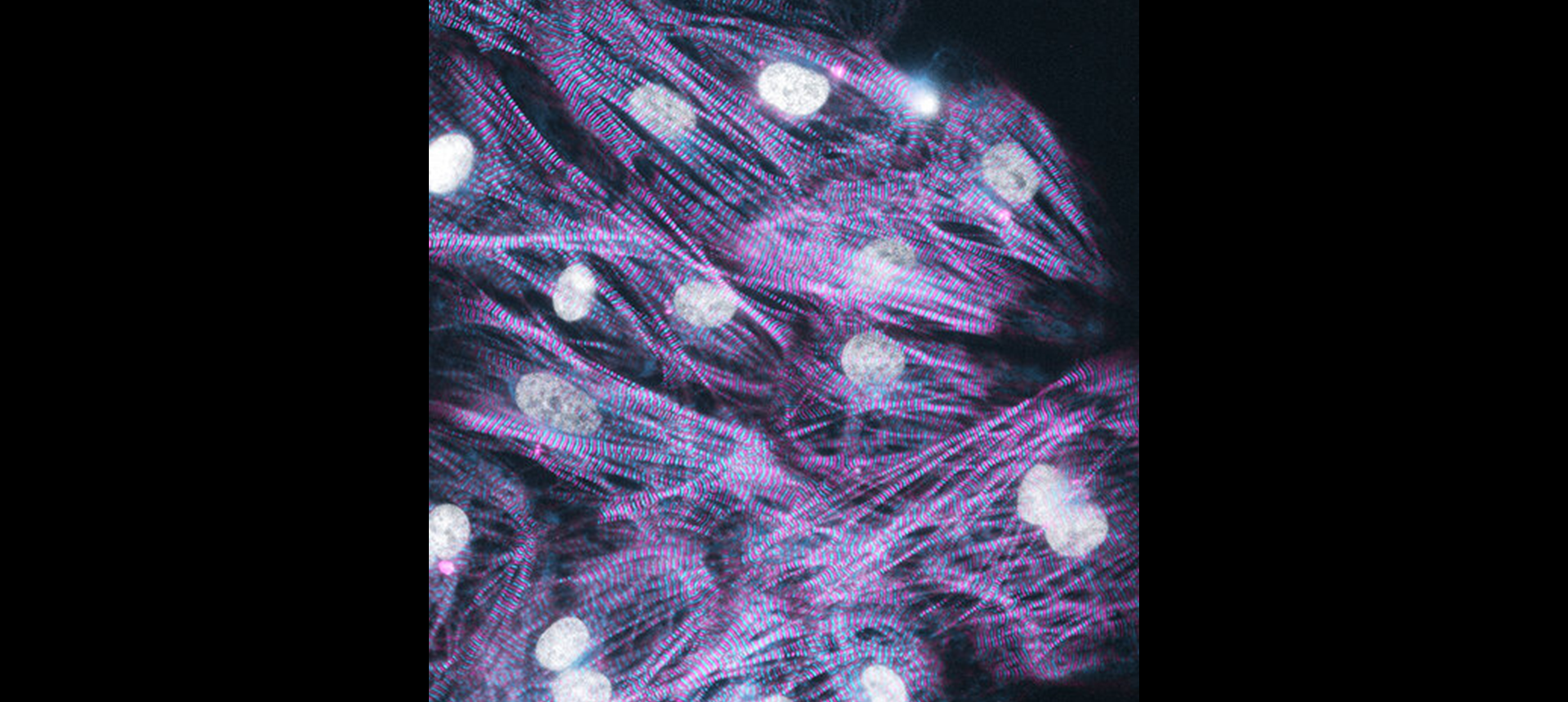
Heart muscle cells cultivated in the laboratory from iPS cells: The image shows the structure of the muscle fibres. The project at Göttingen University Medical Centre (UMG), funded by the zukunft.niedersachsen programme, works with such patient-specific models. Image: umg/lukas cyganek
