


New research findings from the University Medical Center Göttingen (UMG) show that both atria undergo significant changes in cases of persistent atrial fibrillation. Until now, the left atrium in particular was considered to be the main factor in the condition. The results of the international study have been published in the journal Cardiovascular Research.
A research team led by MBExC member Prof. Dr. Niels Voigt, Professor of Molecular Pharmacology at the Institute of Pharmacology and Toxicology at the UMG, and Dr. Christof Lenz, Head of the Proteomics Service Unit at the Faculty of Medicine at the University of Göttingen, in collaboration with Dr. Aiste Liutkute, a postdoctoral researcher in Prof. Voigt’s group, investigated whether and to what extent long-standing atrial fibrillation affects the right atrium. Their study shows that the right atrium also undergoes significant remodelling processes and is becoming increasingly similar to the left atrium.
You can find the press release (in German) here.
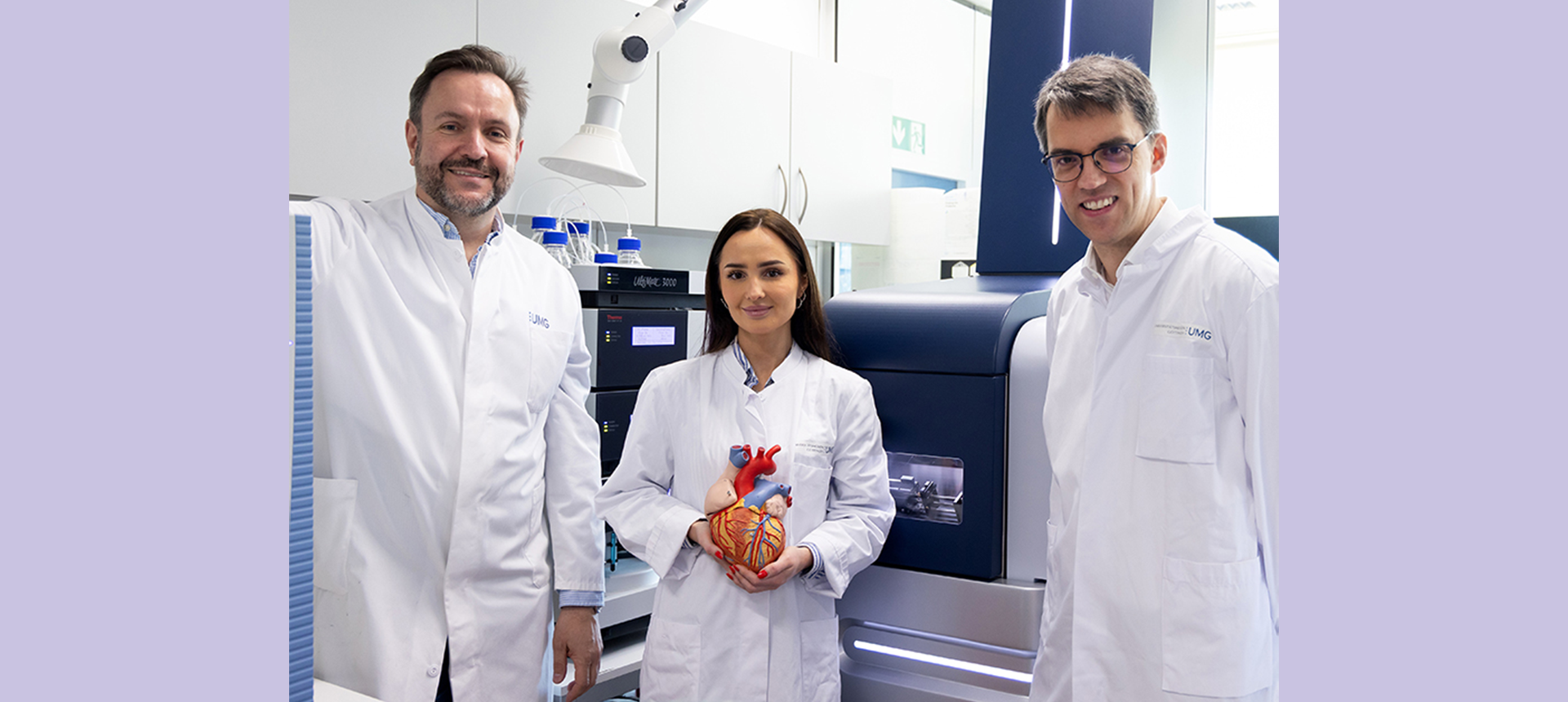
First and last authors: Dr. Christof Lenz, Head of the Proteomics Service Unit at the Faculty of Medicine, University of Göttingen; Dr. Aiste Liutkute, postdoctoral researcher; and Prof. Dr. Niels Voigt, Professor of Molecular Pharmacology at the Institute of Pharmacology and Toxicology, UMG (from left to right). Photo: umg/eva meyer-besting
