March

Home >> 2026 >> March >> Page 2
Feature image not available
19.03.2026

Spatial Adaptation of Primate Retinal Ganglion Cells between Artificial and Natural Stimuli

Authors Vystrčilová M, Sridhar S, Burg MF, Khani MH, Karamanlis D, Schreyer HM, Ramakrishna V, Krüppel S, Zapp SJ, Mietsch M, Gollisch T, Ecker AS Journal eNeuro Citation eNeuro. 2026 Mar 19:ENEURO.0060-26.2026. Abstract The retina encodes a broad range of stimuli, adapting its computations to features like brightness, contrast, and
Learn More

Prof. Dr. Melina Schuh © Irene Böttcher-Gajewski / Max Planck Institute for Multidisciplinary Sciences.

18.03.2026

Leopoldina awards biochemist Melina Schuh the Carus Medal

In order to support couples struggling with infertility, the formation of human germ cells must be precisely understood. Biochemist and MBExC member Melina Schuh studies the development of mammalian egg cells and has discovered why errors can occur during egg cell formation. In recognition of this work, the German National
Learn More
Feature image not available
18.03.2026

Revisiting foundation models for cell instance segmentation

Authors Archit A, Pape C Journal Arxiv Citation arXiv:2603.17845. Abstract Cell segmentation is a fundamental task in microscopy image analysis. Several foundation models for cell segmentation have been introduced, virtually all of them are extensions of Segment Anything Model (SAM), improving it for microscopy data. Recently, SAM2 and SAM3 have
Learn More
Feature image not available
17.03.2026

Myosin II-driven contractions of supporting cap cells promote sensory adaptation of Drosophila proprioceptors

Authors Guan C, Nishi K, Kreis CT, Bäumchen O, Göpfert MC, Schmidt CF Journal Current Biology Citation Curr Biol. 2026 Mar 17:S0960-9822(26)00223-X. Abstract Mechanoreceptors can be motile and actively amplify their mechanical input.1,2,3,4 We here found that the responses of mechanoreceptor cells can also be shaped actively by contractile supporting
Learn More
Feature image not available
17.03.2026

Early demyelination by off-target complement injury in a mouse model of neuromyelitis optica

Authors Kenet S, Herwerth M, Askari S, Eichenseer K, Dornmair K, Qin X, Stadelmann C, Bennett JL, Hemmer B, Misgeld T Journal BioRxiv Citation bioRxiv 2026.03.13.711636. Abstract Neuromyelitis optica spectrum disorder (NMOSD) is an autoimmune CNS disease characterized by serum antibodies targeting astrocytes for complement-mediated lysis. NMOSD lesions show not
Learn More

Prof. Dr. Rubèn Fernández-Busnadiego, leader of the working group “Structural Cell Biology” at the Department of Neuropathology at the University Medical Center Göttingen (UMG), and Dr. Kenneth Ehses, postdoc at the Institute for Neuropathologyat UMG and member of the Hertha Sponer College (from left to right). Photos: mbexc/swen pförtner

16.03.2026

High-resolution electron microscopy sheds light into the cellular responses to stress

An international team led by researchers from the University Medical Center Göttingen (UMG) has used advanced electron microscopy technologies to capture key cellular mechanisms of stress resistance with near-atomic precision. They were able to show that the protein mHsp60, which helps other proteins to adopt their functional form, remodels its
Learn More

Prof. Dr. Rubèn Fernández-Busnadiego, leader of the working group “Structural Cell Biology” at the Department of Neuropathology at the University Medical Center Göttingen (UMG), and Dr. Kenneth Ehses, postdoc at the Institute for Neuropathologyat UMG and member of the Hertha Sponer College (from left to right). Photos: mbexc/swen pförtner

16.03.2026

High-resolution electron microscopy sheds light into the cellular responses to stress

An international team led by researchers from the University Medical Center Göttingen (UMG) has used advanced electron microscopy technologies to capture key cellular mechanisms of stress resistance with near-atomic precision. They were able to show that the protein mHsp60, which helps other proteins to adopt their functional form, remodels its
Learn More

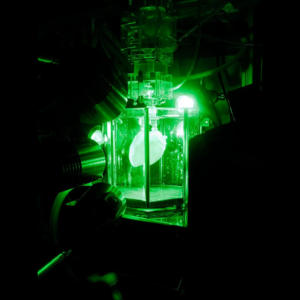
There is a glimmer of hope for heart patients. A team in Göttingen conducted experiments on a rabbit heart suspended in a nutrient solution. This research sheds light on what happens in the heart muscle during cardiac arrhythmias. Based on these findings, the researchers are developing gentler treatments. © Efimov, Nikolski & Salama, Circ. Res. (2004) / Christoph, Schröder-Schetelig, S.L. (2017)

16.03.2026

Clock generator for the heart

Cardiac arrhythmias are one of the main causes of death in industrialised countries. These are often treated with defibrillators, which deliver painful electric shocks. However, physicist and MBExC member Stefan Luther has found a gentler way to stop these arrhythmias. He is now working with industry partners to bring the
Learn More
Feature image not available
14.03.2026

Neuid: A Novel Neuron-Enriched LncRNA that Connects Epigenetic Gene Silencing to Alzheimer’s Disease

Authors Pradhan R, Petrovic Z, Sadman Sakib M, Schröder S, Manfred Krüger D, Pena T, Diniz E, Burkhardt S, Schütz AL, Gisa V, Grzadzielewska I, Toischer K, Stein TD, Krzysztof Blusztajn J, Delalle I, Radulovic J, Sananbenesi F, Fischer A Journal Advanced Science (Weinheim) Citation Adv Sci (Weinh). 2026 Mar
Learn More
Feature image not available
12.03.2026

Neuroinflammatory profiles and cellular localization of TNF-α associated with chronic vanadium neurotoxicity

Authors Folarin RO, Olopade FE, Gilbert TT, Ladagu AD, Dos Santos PIP, Mustapha OA, Kpasham LZ, Outeiro TF, Olopade JO Journal Metabolic Brain Disease Citation Metab Brain Dis. 2026 Mar 12;41(1):52. Abstract Vanadium, an environmental pollutant, is closely associated with neurodegeneration, primarily through oxidative damage and chronic neuroinflammation. While chronic
Learn More
X
EN DE
X
X