2026

Home >> 2026
Feature image not available
15.06.2026

LRRK2/LRRK1 interactions modulate Rab7 activity and inhibit lysosomal exocytosis

Authors Merghani M, Gerhardt E, Hesse M, Fahlbusch C, Boecker CA, Outeiro TF Journal BioRxiv Citation bioRxiv 2026.06.12.731951. Abstract Mutations in the LRRK2 gene are the most common genetic cause of both familial and sporadic Parkinson’s disease (PD). LRRK2 belongs to the leucine-rich repeat kinase (LRRK) family. Two members of
Learn More
11.06.2026

Pint of Science Festival Göttingen

Time: 18-20 May 2026   Location: Göttingen Bars   Pint of Science describes the international (non-profit) organisation of festivals that bring some of the most brilliant scientists to your local pub to discuss their latest research and findings with you. You don’t need any prior knowledge, and this is your
Learn More
Feature image not available
10.06.2026

Toward Chromoselective Transformations in Biological Systems: Perspectives and Challenges

Authors Simeth NA Journal Angewandte Chemie (International ed. in Engl.) Citation Angew Chem Int Ed Engl. 2026 Jun 10:e26148. Abstract Addressing small-molecule chromophores with bioactive properties has been established as an effective means of controlling biological systems for several decades. However, the complexity of in vitro and especially in vivo
Learn More

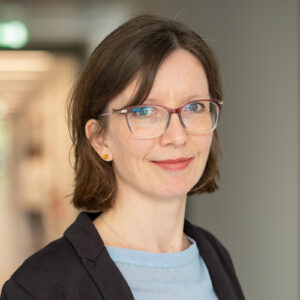
Prof. Dr. Maria-Patapia Zafeiriou, UMG, Photo: MBExC

05.06.2026

New Else Kröner Professorship in Disease Modeling

Dr. Maria-Patapia Zafeiriou will take up the Else Kröner Professorship in Disease Modeling at the Department of Pediatrics and Adolescent Medicine, Division of Neuropediatrics, University Medical Center Göttingen, on June 1, 2026.   A core component of the professorship’s research is neuronal and inner-ear organoids derived from human induced pluripotent
Learn More
Feature image not available
04.06.2026

Correlative X-ray imaging and fluorescence microscopy

Authors Sinha M, Yu B, Mendes da Silva R, Roelleke U, Luley P, Tiburcy M, Zimmermann WH, Burghammer M, Koester S Journal BioRxiv Citation bioRxiv 2026.06.04.730059 Abstract Imaging the structural organization inside cells in their native state is essential for understanding how the arrangement and interactions among molecular components give
Learn More

Dr. med. Tobias Dombrowski, Prof. Dr. med. Tobias Moser, Prof. Dr. med. Dirk Beutner (from left to right). Photos: UMG/ MBExC

03.06.2026

Participants wanted for an online survey

Gene therapy for the inner ear – your opinion matters!   The Else Kröner Fresenius Center for Optogenetic Therapies (EKFZ), in collaboration with the Institute for Auditory Neuroscience and the Department of Otorhinolaryngology at the University Medical Center Göttingen (UMG), is conducting an online scientific survey on gene therapy for
Learn More

Bildrechte liegen beim Club Göttingen

01.06.2026

Touch. Hear. Feel. – Between Sound and Silence

Benefit Concert for the German Cochlear Implant Society   The Rotary Club of Göttingen invites you to a benefit concert on Monday, June 1, 2026, at 7:30 p.m. in the auditorium of the University of Göttingen, which combines musical masterpieces with a scientific perspective on hearing. Göttingen-based artists and Rotarians
Learn More

Significant progress has been made in the treatment of severe heart failure. For the first time, a clinical trial has demonstrated that laboratory-grown heart muscle tissue can improve the pumping function of damaged hearts. Image: UMG/Eva Meyer-Besting

29.05.2026

New hope for severe heart failure: heart patch shows clinical efficacy

Researchers at the University Medical Center Göttingen (UMG) and the University Medical Center Schleswig-Holstein (UKSH) have made a significant breakthrough in the treatment of severe heart failure: for the first time, a clinical trial has demonstrated that laboratory-grown heart muscle tissue can improve the pumping function of damaged hearts. The
Learn More

A novel alpha-synuclein PET tracer, [11C]MODAG-005, visualises pathological protein deposits in the human brain. The split-screen image compares the anatomical brain structure (left) with the molecular pathology (right) and illustrates the selective tracer accumulation in two brain regions (caudate and putamen) of a patient with multiple system atrophy. © Kristina Herfert / University Medical Center Tübingen

28.05.2026

New imaging method makes Parkinson’s disease visible in the living brain

Researchers have developed a PET tracer that can visualize pathological alpha-synuclein aggregates in the brain. The method could contribute to the development of new therapies and help tailor personalized treatments in the future.   “With this new method, we can observe pathological processes directly in the brain for the first
Learn More
Feature image not available
28.05.2026

Stem-Cell-Derived Biologic Ventricular Assist Tissue in Heart Failure

Authors Zimmermann WH, Ensminger S, Kutschka I, Paitazoglou C, Seidler T, Brandenburg S, Anker SD, Bader N, Bergau L, Bremmer F, Diogo PG, Eitel I, Fujita B, Gerecke B, Hasenfuß G, Hellenkamp K, Hermann-Lingen C, Jebran AF, Jurczyk D, Knaus R, Legler T, Lotz J, Placzek M, Pühler T, Riggert
Learn More
X
EN DE
X
X