24.03.2025
Authors Georgiev SV, Rizzoli SO Journal Scientific Reports Citation Sci Rep 15, 10093 (2025). Abstract Neuronal communication relies on synaptic vesicle recycling, which has long been investigated by live imaging approaches. Synapto-pHluorins, genetically encoded reporters that incorporate a pH-sensitive variant of GFP within the lumen of the synaptic vesicle, have
23.03.2025
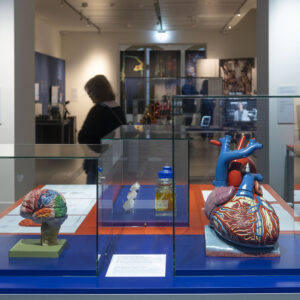
360° Tour of MBExC Heart & Brain exhibition at Göttingen Science Museum Forum Wissen
Welcome to the exhibition ‘Heart & Brain – Understanding Together’! On this virtual tour, we invite you to join us on a journey through the past special exhibition of the Göttingen Cluster of Excellence Multiscale Bioimaging (MBExC), which took place in the Göttingen Forum Wissen in 2024. With
22.03.2025
Number and relative abundance of synaptic vesicles in functionally distinct priming states determine synaptic strength and short-term plasticity
Authors Lin KH, Ranjan M, Lipstein N, Brose N, Neher E, Taschenberger H Journal The Journal of Physiology Citation J Physiol. 2025 Mar 22. Abstract Heterogeneity in synaptic strength and short-term plasticity (STP) was characterized in post-hearing rat calyx of Held synapses at near-physiological external [Ca2+] under control conditions and
21.03.2025
In situ architecture of the human prohibitin complex
Authors Lange F, Ratz M, Dohrke JN, Wenzel D, Ilgen P, Riedel D, Jakobs S Journal Nature Cell Biology Citation Nat Cell Biol (2025). Abstract Prohibitins are a highly conserved family of proteins that have been implicated in a variety of functions including mitochondrial stress signalling and housekeeping, cell cycle
18.03.2025
Improved optogenetic modification of the spiral ganglion neurons for future optical cochlear implants
Authors Thirumalai A, Henseler J, Enayati M, Kusch K, Hessler R, Moser T, Huet AT Journal Theranostics Citation Theranostics 2025; 15(10):4270-4286. Abstract Optogenetic stimulation has become a promising approach for restoring lost body function. For example, partial restoration of vision has been achieved in a blind patient and preclinical proof-of-concept
13.03.2025
Ca2+-triggered (de)ubiquitination events in synapses
Authors Ainatzi S, Kaufmann SV, Silbern I, Georgiev SV, Lorenz S, Rizzoli SO, Urlaub H Journal Molecular & Cellular Proteomics Citation Mol Cell Proteomics. 2025 Mar 13:100946. Abstract Neuronal communication relies on neurotransmitter release from synaptic vesicles (SVs), whose dynamics are controlled by Ca2+-dependent pathways, as many thoroughly studied phosphorylation
13.03.2025
On the Uniqueness of Kantorovich Potentials
Authors Staudt T, Hundrieser S, Munk A Journal SIAM Journal on Mathematics of Data Science Citation SIAM Journal on Mathematical Analysis 2025 57:2, 1452-1482. Abstract Kantorovich potentials denote the dual solutions of the renowned optimal transportation problem. Uniqueness of these solutions is relevant from both a theoretical and an algorithmic
13.03.2025
A feedback circuitry involving γ-actin, β-actin and nonmuscle myosin-2 A controls tight junction and apical cortex mechanics
Authors Maupérin M, Sun Y, Glandorf T, Oswald TA, Klatt N, Geil B, Mutero-Maeda A, Méan I, Jond L, Janshoff A, Yan J, Citi S Journal Nature Communications Citation Nat Commun. 2025 Mar 13;16(1):2514. Abstract Cytoplasmic β- and γ-actin isoforms, along with non-muscle myosin 2 isoforms, are tightly regulated in
10.03.2025
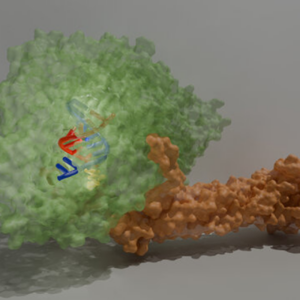
Molecular 3D structure of viral “copying machine” deciphered
Researchers at the University Medical Center Göttingen (UMG) and the Max Planck Institute (MPI) for Multidisciplinary Sciences have shown, for the first time, how the genetic material of the Nipah virus replicates in infected cells. The virus can cause fatal encephalitis in humans. Using cryo-electron microscopy, the team led by
10.03.2025
Leaflet-specific Structure and Dynamics of Solid and Polymer Supported Lipid Bilayers
Authors Karedla N, Schneider F, Enderlein J, Chen T Journal Angewandte Chemie (International ed. in Engl.) Citation Angew Chem Int Ed Engl. 2025 Mar 10:e202423784. Abstract Polymer-supported or tethered lipid bilayers serve as versatile platforms for mimicking plasma membrane structure and dynamics, yet the impact of polymer supports on lipid