


For several years, pre-exposure prophylaxis against HIV (PrEP) has been a major success in preventing new cases. However, individuals on PrEP typically engage in riskier sexual behavior and thus are more susceptible to acquiring other sexually transmitted infections (STIs). To counteract this, people on PrEP have to regularly take mandatory tests for STIs such as chlamydia and gonorrhea. Surveillance evidence shows an increase in people infected with such STIs after initiating PrEP. Now, a new modeling study provides a counterintuitive explanation revealing a testing paradox: even when the observed cases increase, the true numbers of STIs can decrease.
You can find the press release here.
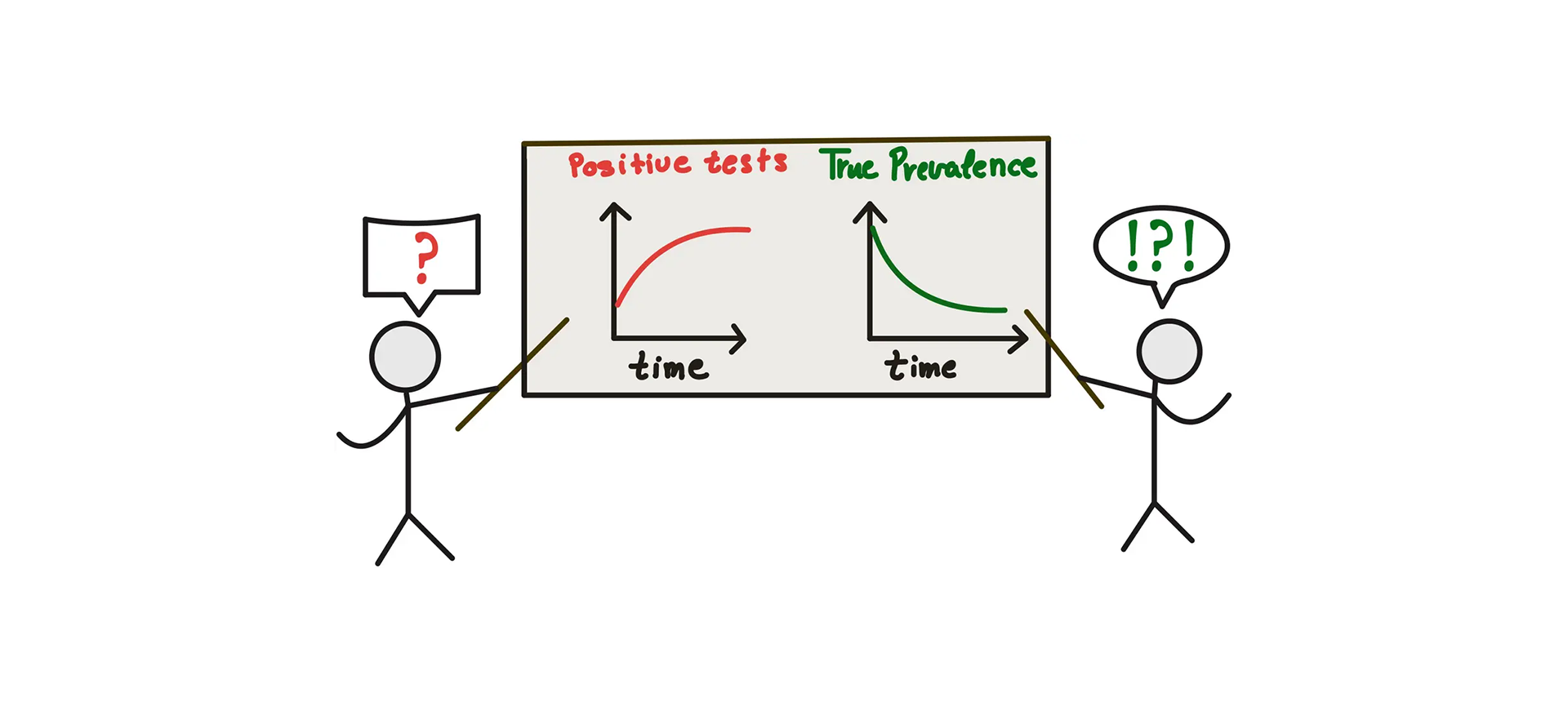
A new epidemiological model shows a paradoxical result: increased infection rates for sexually transmitted diseases may be due to increased testing, while the actual prevalence is declining. © MPI-DS
