04.04.2022
Authors Peña-Díaz S, Pujols J, Vasili E, Pinheiro F, Santos J, Manglano-Artuñedo Z, Outeiro TF, Ventura S Journal Journal of Biological Chemistry Citation J Biol Chem. 2022 Apr 4;298(5):101902. Abstract Parkinson’s disease is a neurodegenerative disorder characterized by the loss of dopaminergic neurons in the substantia nigra, as well as
01.04.2022
Optimal transfer functions for bandwidth-limited imaging
Authors Stallinga S, Radmacher N, Delon A, Enderlein J Journal Physical Review Research Citation Phys. Rev. Research 4, 023003. Abstract One of the fundamental limits of classical optical microscopy is the diffraction limit of optical resolution. It results from the finite bandwidth of the optical transfer function (or OTF) of
01.04.2022
Selective optogenetic control of Gq signaling using human Neuropsin
Authors Wagdi A, Malan D, Sathyanarayanan U, Beauchamp JS, Vogt M, Zipf D, Beiert T, Mansuroglu B, Dusend V, Meininghaus M, Schneider L, Kalthof B, Wiegert JS, König GM, Kostenis E, Patejdl R, Sasse P, Bruegmann T Journal Nature Communications Citation Nat Commun. 2022 Apr 1;13(1):1765. Author Correction: Nat Commun.
31.03.2022
Extracellular Matrix Recycling as a Novel Plasticity Mechanism With a Potential Role in Disease
Authors Dankovich TM, Rizzoli SO Journal Frontiers in Cellular Neuroscience Citation Front Cell Neurosci. 2022 Mar 31;16:854897. Abstract The extracellular matrix (ECM) stabilizes neural circuits and synapses in the healthy brain, while also retaining the ability to be remodeled, to allow synapses to be plastic. A well-described mechanism for ECM
29.03.2022
Roles and dynamics of 3-methylcytidine in cellular RNAs
Authors Bohnsack KE, Kleiber N, Lemus-Diaz N, Bohnsack MT Journal Trends in Biochemical Sciences Citation Trends Biochem Sci. 2022 Mar 29:S0968-0004(22)00063-9. Abstract Modified nucleotides within cellular RNAs significantly influence their biogenesis, stability, and function. As reviewed here, 3-methylcytidine (m3C) has recently come to the fore through the identification of the
28.03.2022
Sound to touch
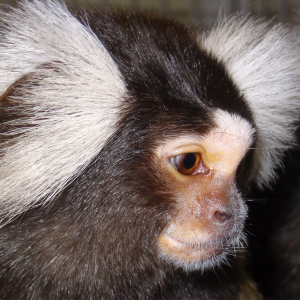
A team of researchers led by Marcus Jeschke at the German Primate Center – Leibniz Institute for Primate Research (DPZ) and at the Institute for Auditory Neuroscience led by MBExC member Tobias Moser at the University Medical Center has developed an automated auditory training program that marmoset monkeys can perform
28.03.2022
Flexible auditory training, psychophysics, and enrichment of common marmosets with an automated, touchscreen-based system
Authors Calapai A, Cabrera-Moreno J, Moser T, Jeschke M Journal Nature Communications Citation Nat Commun. 2022 Mar 28;13(1):1648. Abstract Devising new and more efficient protocols to analyze the phenotypes of non-human primates, as well as their complex nervous systems, is rapidly becoming of paramount importance. This is because with genome-editing
22.03.2022
Why some nerve cells have more to say
Nerve cells communicate via chemical neurotransmitters stored in small containers, termed synaptic vesicles. Some of these cells are more ‘articulate’ than others as they can send more than one type of messenger. By which mechanism such multilingual communication takes place, however, remained a puzzle. Researchers from the Max Planck Institute
21.03.2022
Stage-specific control of oligodendrocyte survival and morphogenesis by TDP-43
Authors Heo D, Ling JP, Molina-Castro GC, Langseth AJ, Waisman A, Nave KA, Möbius W, Wong PC, Bergles DE Journal Elife Citation eLife. 2022 Mar 21;11:e75230. Abstract Generation of oligodendrocytes in the adult brain enables both adaptive changes in neural circuits and regeneration of myelin sheaths destroyed by injury, disease,
18.03.2022
Glycation modulates alpha-synuclein fibrillization kinetics: a sweet spot for inhibition
Authors Farzadfard A, König A, Petersen SV, Nielsen J, Vasili E, Dominguez-Meijide A, Buell AK, Outeiro TF, Otzen DE Journal Journal of Biological Chemistry Citation J Biol Chem. 2022 Mar 18:101848. Abstract Glycation is a nonenzymatic posttranslational modification (PTM) known to be increased in the brains of hyperglycemic patients. Alpha-synuclein